


Wrapping up the 2021 AALS meeting
This is my third and final report on UC Davis School of Law’s banner days at the (virtual) annual meeting of the Association of American Law Schools (AALS). I have been able to pop in on many of the programs in which our faculty contributed. Our faculty always make me proud to have the privilege of working with them.
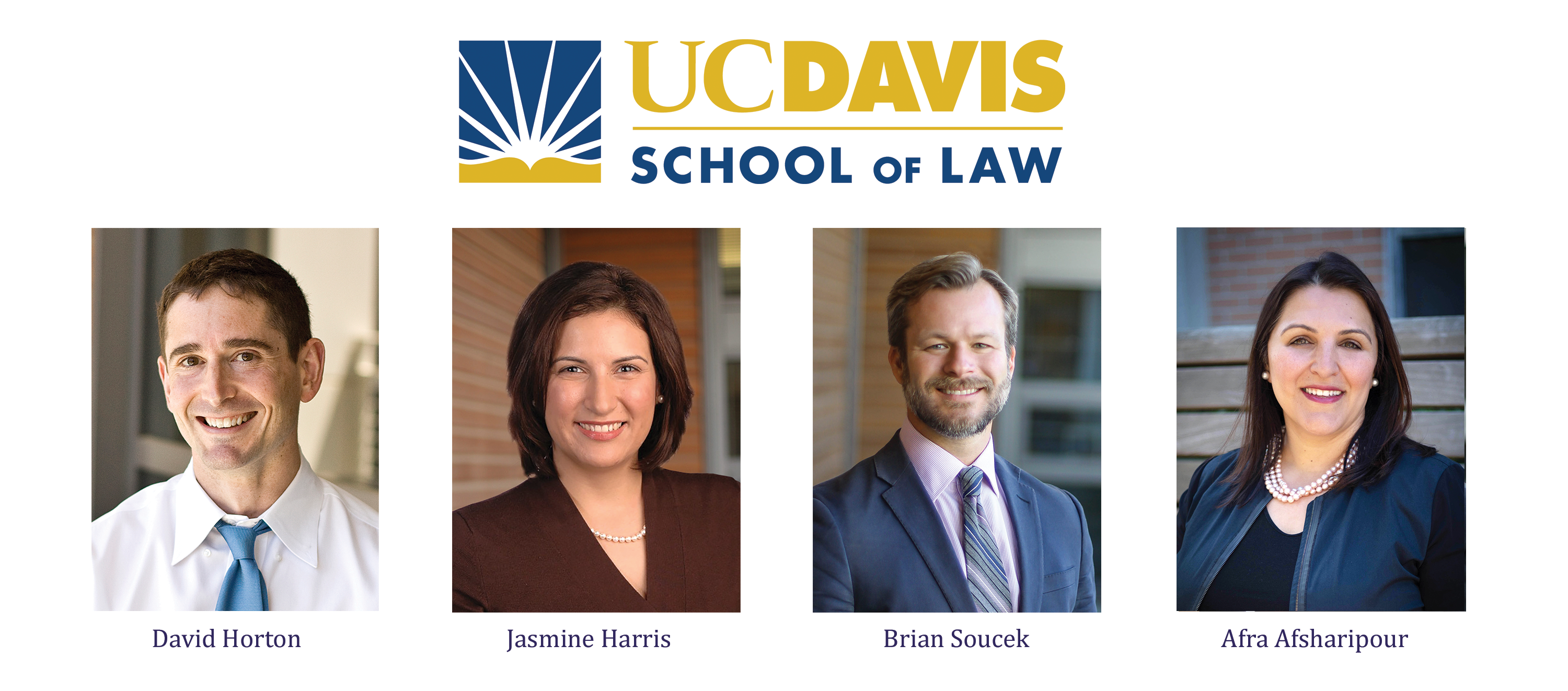
Professor David Horton moderated the Section on Trusts and Estates program on New Developments in Trusts and Estates. The panel considered how technology, COVID-19, and interdisciplinary research are transforming trusts and estates law.
Professor Jasmine Harris had a huge AALS day, with three presentations (all touching on disability law in different ways). That must be some kind of record. Professor Harris opened the day as a participant, along with Professor Brian Soucek, on the program of the Section on Civil Procedure on “Integrating Critical Legal Perspectives.” The program addressed themes that emerge from taking a critical look at how we think about, write, and teach civil procedure. Professor Harris offered critical perspectives on disability and procedure while Professor Soucek critically addressed the same-sex marriage litigation.
Next, one of our star Evidence instructors, Professor Harris moderated a program of the Section on Evidence, Co-Sponsored by Civil Rights, Criminal Justice, Minority Groups, and Law and the Social Sciences on “Unregulated Evidence.” Rules of evidence regulate the admissibility of witness testimony and exhibits, but juries also observe the parties’ bodies, dress, and demeanor, and see how fellow jurors, members of the public, and the judge react to the evidence. This panel explored how this unregulated evidence affects the trial, and whether the current system should change.
Professor Harris completed the day on a AALS Hot Topic Program on “Disability and COVID-19 -- Lessons from Disability, Lessons from the Pandemic.” She established a framework for the other distinguished panelists to look at how the pandemic has devastated disabled people.
Besides attending my colleagues’ programs, I co-facilitated two programs for the law school deans, who are experiencing many challenges managing law schools during a pandemic. One focused on building community during a pandemic, the other on the appropriate responses of law schools to the increasing student diversity. It always is exhilarating to compare notes with law school deans on common issues.
On the final day, Senior Associate Dean Afra Afsharipour represented UC Davis in the AALS House of Representatives.