


Paying Tribute to My Friend Cruz
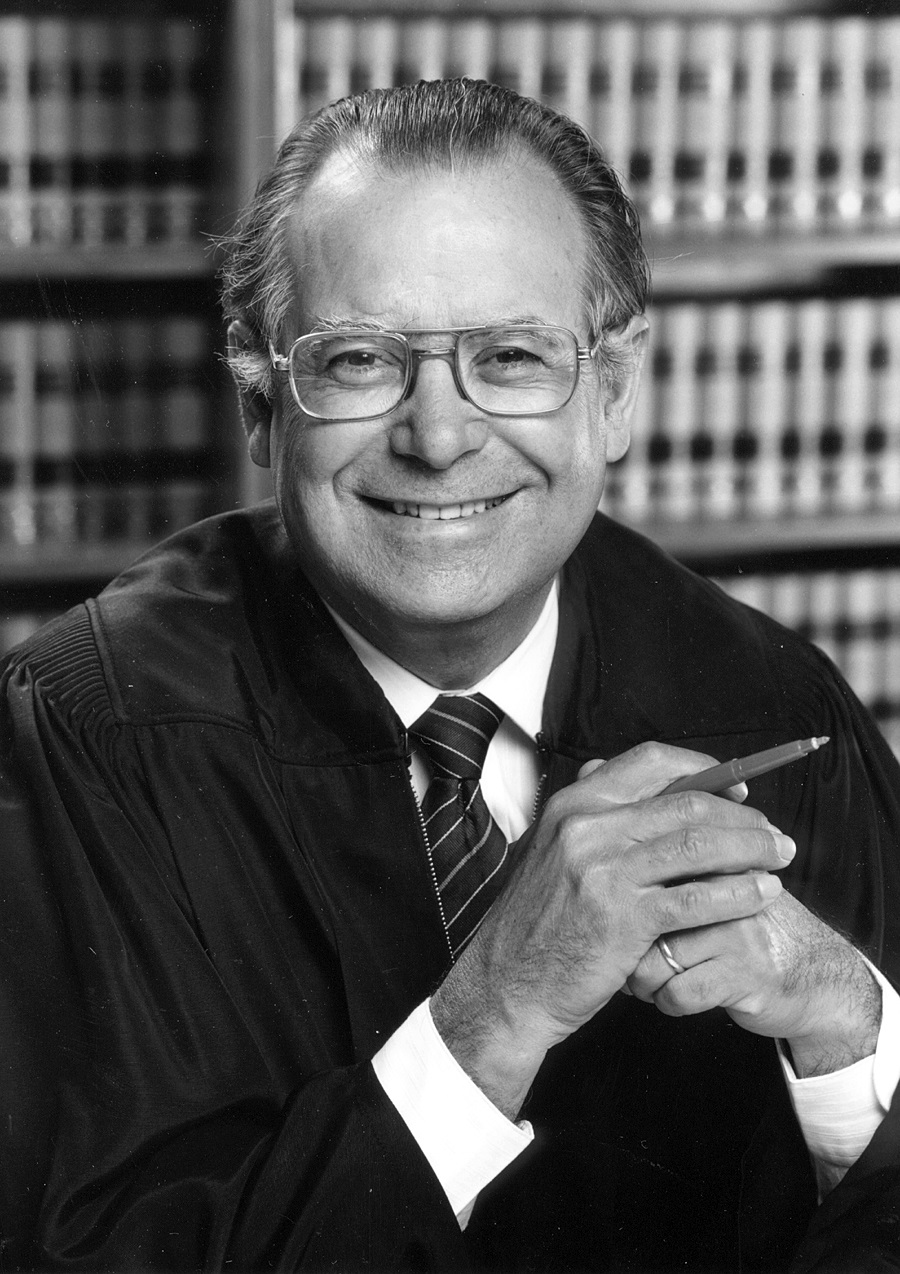
My remarks today as part of the California Supreme Court's special session in tribute to the memory of Justice Cruz Reynoso:
Thank you, Chief Justice. It is with true sadness that I say a few words today. Cruz Reynoso was a legend. A force for good. A wonderful faculty colleague. And a friend. I will miss him. We all are diminished by his loss. I will not dwell on Justice Reynoso’s amazing career. You know all about that.
* 1968 – Cruz became head of California Rural Legal Assistance (CRLA) and fought the Governor at the time to keep it fighting for justice for the rural poor. For the forgotten. He fought the short-handle hoe and the deadly pesticide DDT. He fought for farmworker lives.
Thank you, Chief Justice. It is with true sadness that I say a few words today. Cruz Reynoso was a legend. A force for good. A wonderful faculty colleague. And a friend. I will miss him. We all are diminished by his loss. I will not dwell on Justice Reynoso’s amazing career. You know all about that.
* 1968 – Cruz became head of California Rural Legal Assistance (CRLA) and fought the Governor at the time to keep it fighting for justice for the rural poor. For the forgotten. He fought the short-handle hoe and the deadly pesticide DDT. He fought for farmworker lives.
* Cruz Reynoso was a respected law professor at the University of New Mexico, UCLA, and UC Davis. Students loved him. A gifted storyteller, Cruz regaled his classes with stories from his law career. He was free with his time and actively mentored students and alums. Imagine having a former Supreme Court justice as a mentor. He was a role model and regularly attended student meetings of La Raza Law Students Association.
* Governor Jerry Brown appointed Cruz Reynoso to the California Court of Appeals, Third Appellate District, in 1976. He then joined the California Supreme Court. Cruz was not bitter about the 1986 recall. As he put it, the outcome was “just politics.”
* Cruz served 11 years on the U.S. Commission on Civil Rights. Among other things, Cruz Reynoso challenged the voting irregularities in Florida in the 2000 election.
You all know all of this. But what I really want to talk about is Cruz Reynoso as a person. He was perhaps the most decent person I have ever met.
I first met Cruz in the spring of 1985. We both were walking down the street near the Civic Center in San Francisco after a fundraising lunch for a legal services group. I was with a group of summer clerks from the law firm where I was working. We ran into a man walking briskly toward the Supreme Court. He said hello and we talked. I recognized the justice. He talked to all of us like we were long-lost friends. Cruz talked with the summer clerks. After we went in different directions, I told the clerks who he was. They were in awe.
Years later, I had the pleasure of seeing Cruz daily. Even though he retired in 2006, Cruz could be expected to be in bright and early in the office at 7 a.m. In a suit. With a tie. He rode his bike to work. He had work to do. One of his projects was his autobiography, which he partially completed. I told him that he should finish it and offered to have him dictate something to me 15 minutes at a time. His response was what one would expect from a supremely humble man: Kevin, “there are more interesting things for me to work on."
We got into the habit of talking most mornings, when the building was quiet, his phone was not ringing, and people were not stopping by his office non-stop. Among many other topics, he talked nostalgically of starting his law office to help working people in the Imperial Valley, running for the California Assembly and being attacked as a communist, and his famous “justice bone.”
Cruz Reynoso loved his family and would do anything for them. When he drove his wife Jeannene monthly from Herald to Los Angeles to see her cancer doctor (she did not fly), he did not complain. Nor did he complain about driving her to family reunions in the summers to Tennessee. He wasn’t a complainer. When we were trying to lure Cruz to UC Davis from UCLA, we made sure that Jeannene joined us for the discussions. They had a ranch in Herald and he was working at UCLA; she was central to the discussion. As I was later told, Cruz liked it when I later bragged UC Davis “did what the INS couldn’t do. We reunite families.”
We were blessed when Cruz Reynoso joined our faculty. He was the inaugural holder of an endowed chair for the Study of Freedom and Equality. He taught Remedies, Professional Responsibility, Advanced Civil Rights, and other courses. He retired in 2006. But he still attended faculty meetings, gave me advice, and consistently argued for lower tuition for students and greater diversity among our students and faculty. He was our conscience. He was my conscience. And he gave to all.
He had a special showing for our staff of the documentary “Cruz Reynoso: Sowing the Seeds of Justice” and spoke with them after the showing. In retirement, at the request of the President of the University of California, he led a task force that looked into the 2011 incident where students were pepper-sprayed on the UC Davis campus. He led another investigation into the police killing of a farmworker in Woodland. He reviewed materials for a claim of racial discrimination by San Francisco police. He was active — and beloved — in the Schwartz/Levi Inn of Court and the Cruz Reynoso Bar Association. Put simply, Cruz Reynoso’s “justice bone” kept him extremely busy even when he technically was retired.
I could go on. But you get the idea. We all were fortunate to know a remarkable person, the paragon of decency. And we will miss him.