


Dr. Pippa Holloway examines history of access to court testimony
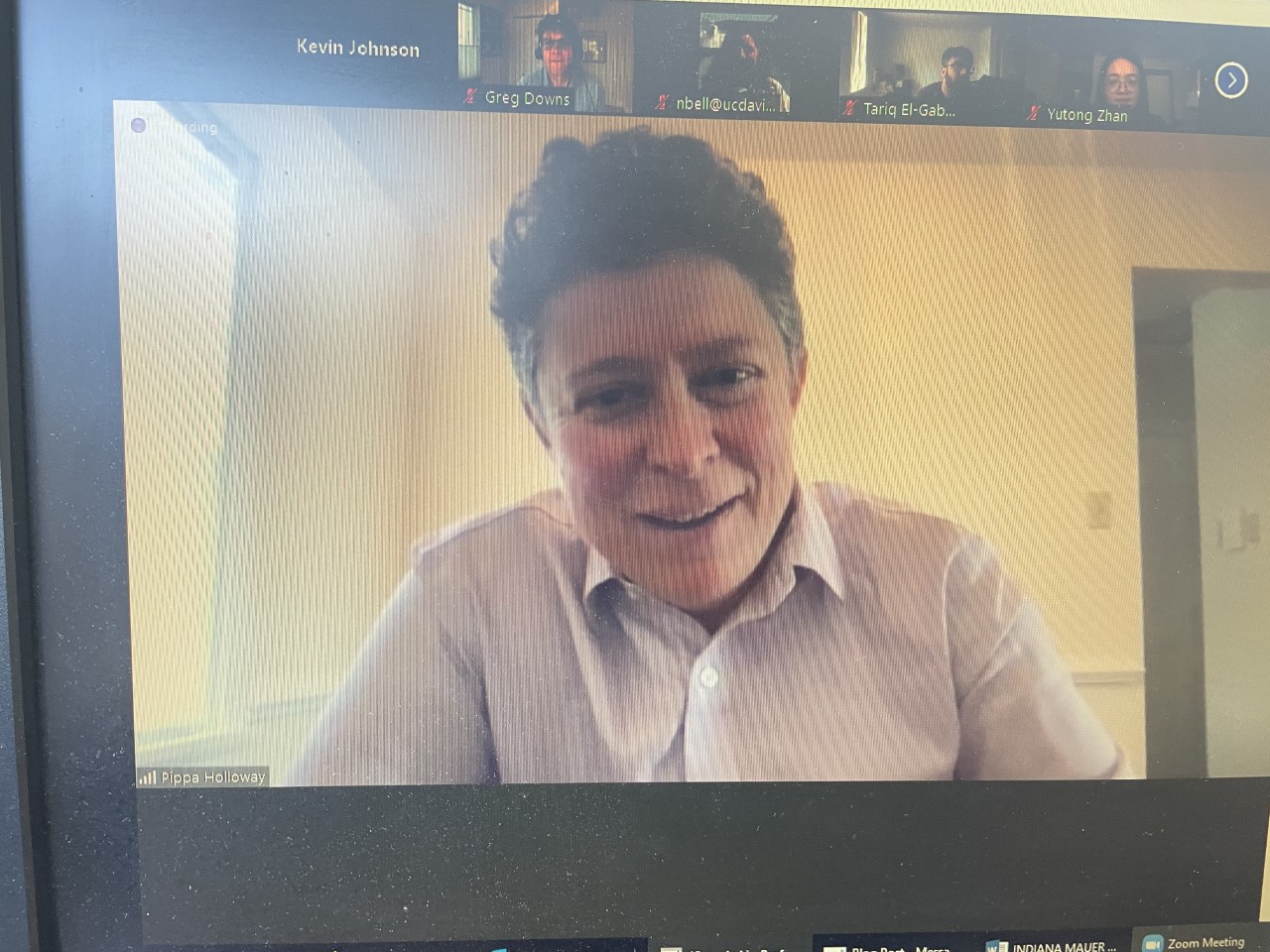
On April 6, the School of Law’s Aoki Center/UC Davis History Department Free People of Color Seminar Series hosted a virtual lecture by Dr. Pippa Holloway of the University of Richmond.
The title of her talk was “Reconstruction and the Long History of Equal Access to Court Testimony.” This academic year series has brought outstanding race scholars from across the United States to the King Hall community (virtually).
Professor Holloway’s presentation observed that the standard narrative of the equalization of court testimony as being accomplished through the Civil Rights Act of 1866 overlooks a longer, more complicated story. African Americans found ways around barriers to testimony against whites in certain instances during the era of chattel slavery. White Southerners – including prosecutors, crime victims, and judges – supported African American testimony in some cases when it was needed for the conviction of particularly dangerous white criminal offenders. Restrictions on testimony pitted legislatures against courts, and courts sometimes resisted restrictions on evidence when these restrictions did not serve the ends of justice.
This paper is part of a longer project on the history of limitations on court testimony.
It was a treat to have Professor Holloway talk under the auspices of the Aoki Center. She is the Douglas Southall Freeman Distinguished Professor of History at the University of Richmond. Her research and teaching focuses on legal and political culture in the 19th and 20th century United States. Her most recent book is Living In Infamy: Felon Disfranchisement and the History of American Citizenship. She is also the author of Sexuality, Politics, and Social Control in Virginia, 1920-1945 .